
Understanding Production AI in Business Transformation - Copy - Copy
Artificial Intelligence, Business Transformation
What Production AI Actually Looks Like
Beyond the hype and glossy demos, production AI is a set of very real, often unglamorous systems quietly reshaping how work gets done every day. Here’s what it actually looks like once it leaves the lab and enters the business.
It’s Quietly Embedded in Existing Workflows
Production AI rarely looks like a robot in the hallway or a futuristic hologram. It looks like a feature inside tools people already use: “smart” search in a knowledge base, automatic fraud flags in a banking dashboard, or suggested next best actions inside a customer service platform.
Employees often don’t even realize they are “using AI.” They just notice that forms are pre-filled more accurately, that risky transactions surface sooner, or that customers get routed to the right person faster. The AI is embedded, not showcased. It’s one component in a larger system, not the star of the show.
It Runs on Boring but Robust Infrastructure
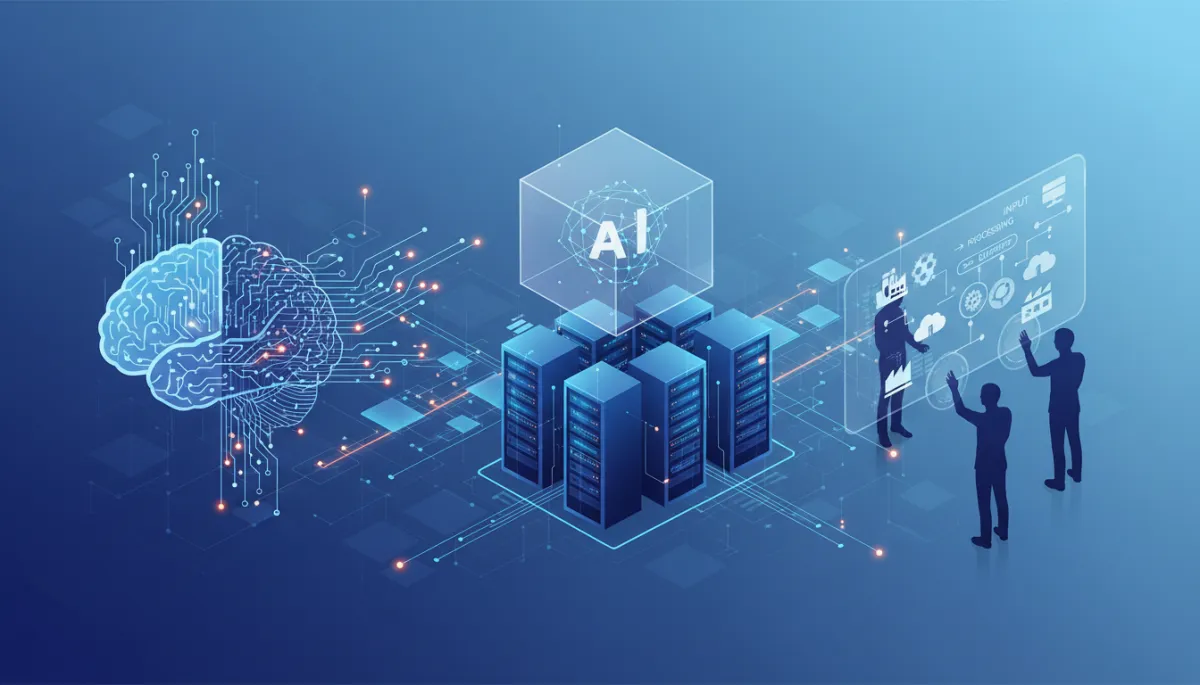
In production, AI is less about clever algorithms and more about reliability. Models sit behind APIs, batch jobs, and data pipelines. They run on cloud servers, containers, or on-prem hardware that must be patched, monitored, and secured like any other critical system.
There are version numbers, deployment schedules, rollback plans, access controls, and audit logs. The glamorous “AI model” is just one part of a longer chain that includes data ingestion, cleaning, feature generation, prediction, and delivery back into a product or workflow. If any link is brittle, the whole system suffers—no matter how advanced the model is on paper.
It’s Surrounded by Metrics, Alerts, and Dashboards
Production AI is constantly watched. Organizations track not just technical performance (latency, error rates, uptime) but also business impact (conversion lift, cost savings, reduced handling time) and fairness or risk indicators.
Dashboards show how often models are used, how accurate they are in real conditions, how they behave across different customer segments, and when their performance starts to drift. When something looks off, alerts go to the same operations and product teams that handle any other critical system. AI is operationalized, not treated as a one-off experiment.
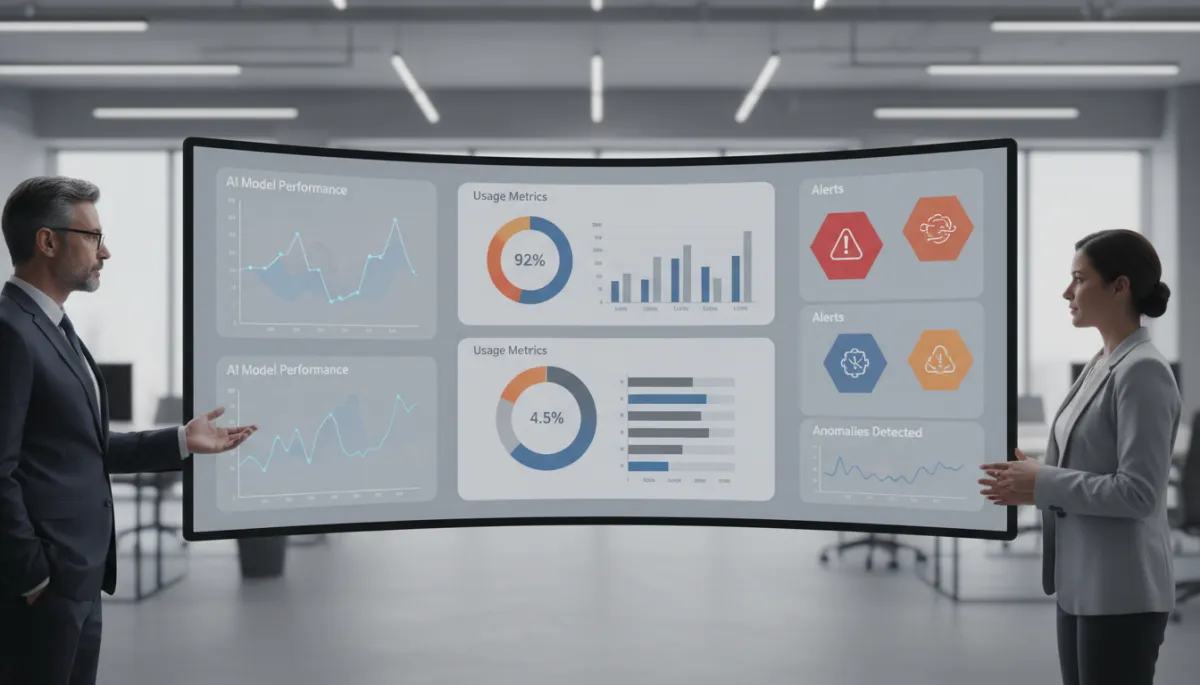
Mature AI programs tie model performance directly to measurable business outcomes.
It Has Clear Owners, Policies, and Guardrails
In production, AI is not a side project; it is a responsibility. There are named owners: product managers, data leads, risk or compliance partners, and business sponsors. They define where AI can and cannot be used, what human oversight is required, and how to handle edge cases or customer complaints.
Guardrails might include human review for high-impact decisions, strict logging of model outputs, or automatic fallbacks to simpler rules when confidence is low. Production AI is framed by policy and process, not just by accuracy metrics in a slide deck.
💡 Pro Tip: Treat every AI system like a long-term product, not a one-time project. Assign owners, define success metrics, and plan for ongoing maintenance from day one.
It Evolves Through Iteration, Not Magic
Perhaps the most important truth: production AI is never finished. Models are retrained as data shifts, regulations change, or customers behave differently. Teams adjust prompts, thresholds, and interfaces. They learn where AI helps and where it gets in the way, then refine accordingly.
From the outside, this can look surprisingly ordinary—just another cycle of testing, feedback, and improvement. But that’s exactly the point. What production AI actually looks like is real work getting better: more consistent decisions, faster responses, fewer manual steps, and teams with more time to focus on the problems that truly require human judgment.
The Takeaway: Less Spectacle, More Substance
When you strip away the buzzwords, production AI is a practical, disciplined capability woven into everyday operations. It’s dashboards and workflows, policies and playbooks, metrics and maintenance. It’s not about impressing a conference audience; it’s about delivering small, reliable improvements at scale.
If your AI efforts don’t yet look this ordinary, they may still be in the experimental stage. The real value begins when AI stops being a spectacle and starts feeling like an integral, dependable part of how your organization works.
